A Blueprint of Dreams: Understanding the Screenplay’s Role in Classical Hollywood
There’s something ineffably magical about classical Hollywood, isn’t there? Think back to films like “Gone with the Wind,” “Casablanca,” or “The Wizard of Oz.” These stories were vividly realized through impeccable performances, groundbreaking cinematography, and captivating plots. But the unsung hero behind these masterpieces is often the screenplay, the very backbone of the cinematic experience.
Now, you may ask, why focus on classical Hollywood? To put it simply, studying the golden age of cinema offers a rich playground for understanding narrative rules and tools. It’s like Chekhov’s gun; if a screenplay element is introduced, you can bet it’ll be used by the final act, and classical Hollywood screenplays are quintessential examples of this dramatic principle.
A Brief Soiree into History
So what exactly defines this era we call classical Hollywood? Generally, this term refers to American cinema between the 1910s and the 1960s. The era was characterized by a set of narrative and visual conventions that seemed almost formulaic but had a sweeping impact on storytelling across the globe. We’re talking about an industry driven by studios like MGM, Warner Bros., and 20th Century Fox, which churned out films that appealed to the broadest possible audience.
The Screenplay as the Foundation
During the classical Hollywood era, the screenplay was treated much like an architectural blueprint. It was meticulously crafted, detailing each scene, character interaction, and dialogue exchange with an almost obsessive precision. Without this scriptural skeleton, the film’s flesh and bones—being the directorial vision and the actors’ performances—had nothing to latch onto. This isn’t too different from writing a screenplay today; although technology and styles have changed, the foundational importance of the script remains the same.
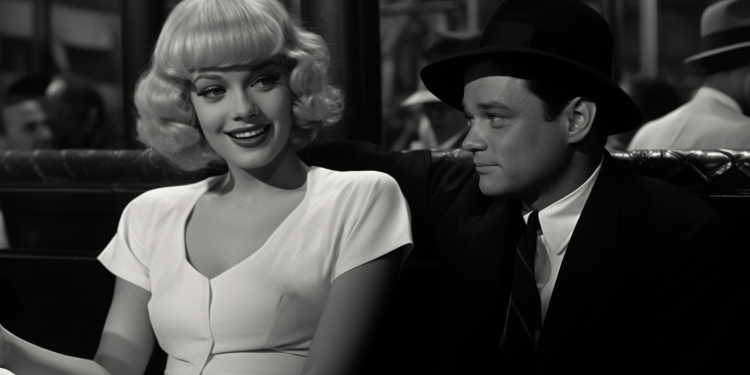
You’ve probably heard of the term three-act structure, right? This was the pillar of screenplays back then and remains incredibly influential today. The structure typically involved a setup, confrontation, and resolution, designed to take the audience on an emotional rollercoaster, encapsulating them in a narrative bubble from which they wouldn’t want to break free.
Invisible Storytelling: Less is More
Now, here’s something intriguing about classical Hollywood storytelling: the concept of “invisible storytelling.” Invisible storytelling involved making the structure and mechanics of the screenplay as seamless as possible so the audience could immerse themselves fully in the film’s world. Elements of the plot, character arcs, and even visual cues were so well-integrated that viewers felt they were not merely spectators but participants in a living, breathing world.
This ‘invisibility’ didn’t just happen. Screenwriters like Ben Hecht, Frances Marion, and Herman J. Mankiewicz were masters of their craft, adeptly layering themes, dialogue, and symbolism to construct multi-dimensional films. Let’s not forget the role of story editors, who served as the gatekeepers and sculptors of these narratives, ensuring they aligned with studio expectations while retaining their artistic integrity.
For any budding screenwriter or even a seasoned professional, there are crucial writing tips to be unearthed in studying this era. For example, it’s invaluable to see how classical screenplays were capable of ‘showing’ rather than ‘telling’—a skill that is paramount in writing a screenplay that speaks to audiences on a visceral level.
The Art of Screenwriting: Lessons from Classical Hollywood
Screenwriting in the golden era was an exercise in innovation within constraints. Many of the writing tips and screenplay structure norms we adhere to today can be traced back to the ingenuity of the artists of this time. Remember, back then, they didn’t have the plethora of screenwriting software or writing prompts available to today’s writers. Yet, their works remain timeless.
Mastering the Three-Act Structure
If there’s a Bible in the screenwriting world, it’s likely Syd Field’s “Screenplay,” a book that articulates the value of the three-act structure, a cornerstone in the architecture of film. The three-act structure is as old as Aristotle, but classical Hollywood refined it to an art form. The setup, confrontation, and resolution were carefully designed to engage audiences and make the two-hour experience worth every penny spent on the ticket.
Let’s take “Casablanca” as a case study. The opening act places us in a world steeped in tension—wartime Morocco. Rick, our protagonist, is introduced, along with the central conflict of love and duty. Act Two is a cauldron of escalating conflicts, and Act Three provides a satisfying, albeit complex, resolution. This is not merely by happenstance but a function of skillful screenwriting, demonstrating how a well-crafted three-act structure serves as the scaffolding upon which the entire narrative is built.
Dialogue: The Soul of the Screenplay
Ah, dialogue. Who can forget those immortal lines from “Gone with the Wind” or “The Maltese Falcon“? In classical Hollywood, dialogue wasn’t just speech; it was music, a lyrical progression that gave voice to a film’s emotional and thematic undercurrents. “Double Indemnity” serves as a fabulous example. The exchanges between Walter and Phyllis are replete with subtext, sexual tension, and a foreboding sense of doom—all wrapped in seemingly simple conversations.
For screenwriters looking for writing tips, studying the dialogue of these classical works can be incredibly enlightening. Look at how the dialogue serves multiple functions—advancing the plot, revealing character, and often, disguising the true intentions or feelings of the characters. It’s a lesson in economical writing; every word serves a purpose.
The Principle of Unity
Classical Hollywood films are studies in unity, where each element serves the larger story. Think of it as a form of thematic resonance. For instance, in “To Kill a Mockingbird,” the overarching theme of racial injustice is not just confined to the central courtroom drama but echoed in subplots and character arcs. Even the title itself is a metaphor for the unjust killing of innocence, which encapsulates the essence of the film.
In practical terms, this focus on unity suggests that when you’re writing a screenplay, you might consider how each subplot, each secondary character, or even each line of dialogue can be used to reinforce the central themes or emotional truths you’re exploring. This enhances the cohesiveness of the story, making it more compelling and resonant.
The Studio System and Its Impact on Writing
Now, let’s take a brief detour to talk about the unique environment that influenced screenwriting during this era: the studio system. Unlike the more decentralized landscape of today, classical Hollywood was dominated by a handful of major studios, each producing a conveyor belt of films to meet the insatiable demand for entertainment. Screenwriters often worked in-house, sometimes even in pairs or groups, churning out scripts under tight deadlines.
In this high-pressure ecosystem, the screenplay couldn’t be a meandering work of art; it had to be tight, engaging, and most importantly, sellable. That’s why screenwriters of that era were masters of trimming the fat, focusing only on elements that served the story or the characters. This is a key take-away for modern screenwriters: Be ruthless in your editing. If a scene, dialogue, or even a character doesn’t serve the narrative purpose or thematic goals, it’s worth reconsidering its place in your screenplay.
Applying the Craft: How to Integrate Classical Techniques into Modern Screenwriting
In the digital age, where screenwriting software can auto-format your script and platforms like Final Draft or Celtx offer a multitude of writing prompts, one may wonder, how relevant are the storytelling techniques from Classical Hollywood? The answer is resoundingly clear: incredibly relevant. The time-tested methods can not only add finesse to your screenplay but also offer you robust screenwriting tips for mastering the art of storytelling.
Narrative Economy and Focus
The first lesson to apply is narrative economy, a concept that classical Hollywood screenwriters excelled at. They had to; they were operating under the studio system that prized efficiency. Take “All About Eve,” for instance. The entire character arc of Eve Harrington unfolds meticulously within the boundaries of the theater world. No scene is superfluous; every line of dialogue serves a purpose.
To integrate this into your own writing, consider creating an outline where you scrutinize each scene for its utility. Does it move the plot forward, develop a character, or enrich the thematic texture of the screenplay? If not, out it goes. Tools like Scrivener can be exceptionally useful for rearranging scenes and examining the pacing of your story without getting lost in the text itself.
Multi-Dimensional Characters
Classical Hollywood was a treasure trove of rich, multi-dimensional characters. Remember Scarlett O’Hara or Atticus Finch? They were complex and flawed, but also deeply human. When writing a screenplay, take the time to flesh out your characters. Go beyond the surface-level traits and dig into their motivations, fears, and contradictions.
A useful exercise is to write character bios or conduct interviews with your characters. There are numerous writing tips to develop depth in your characters, but the key is to understand them as fully realized individuals, not just pegs to move your plot forward.
The Value of Subtext
Classical Hollywood teaches us the value of saying something without saying it directly—yes, the art of subtext. Dialogue laden with subtext not only adds layers to your characters but also enhances the emotional resonance of your script. Consider “Sunset Boulevard.” The dialogue between Norma Desmond and Joe Gillis is always about more than the words being spoken.
For instance, you could write a scene where a character says, “I love you,” or you could show them doing something that conveys love without saying the words. This is a crucial aspect of screenplay structure—ensuring that actions often speak louder than words.
Leverage the Three-Act Structure
Even in today’s fragmented narrative landscape, the three-act structure still has immense value. This framework, fine-tuned by classical Hollywood, provides a solid foundation for your story. Many of the writing prompts you might use can be adjusted to fit within this structure, creating a roadmap that guides your storytelling.
Here’s an actionable tip: After completing your first draft, identify the inciting incident, the midpoint, and the climax. Now see if these critical moments align with the transitions between your acts. If not, you might have to do some structural readjusting. This might sound basic, but you’d be surprised how many screenplays miss these key structural signposts.
Keep the Audience in Mind
Last but not least, let’s talk about the audience. Classical Hollywood was brilliant at balancing artistic intent with audience engagement. They knew how to entertain, evoke emotions, and sometimes even challenge societal norms—all while keeping the viewer hooked. When writing a screenplay, never lose sight of the experience you’re crafting for the audience.
Is your script engaging from the first page to the last? Does it have moments of levity, tension, and emotional payoff? Use screenwriting software to track pacing and emotional beats to ensure that you’re offering an engaging audience experience.
The beauty of screenwriting lies in its collaborative nature. We build upon the work of those who came before us. By understanding and applying the narrative techniques honed during Hollywood’s Golden Age, we can craft stories that are not only well-structured but deeply emotive. So, as you type away at your next screenplay, remember that you’re part of a rich, dynamic tradition—a lineage of storytellers who understood the irreplaceable power of a well-told tale.
✍️ Whether you’re mastering the art of dialogue, structure, or character development, the power of AI can be a game-changer in your writing journey. My Free Ebook, ‘AI for Authors’ delves into how AI-powered prompts can provide a unique edge to your storytelling process. If you’re intrigued by the prospect of supercharging your fiction skills, download your free copy today and explore new horizons in creative writing.
 A.I. in Screen Trade