The Unorthodox Narrative: A Look at ‘Lost’s’ Multilayered Storytelling
If you ever find yourself craving an example of storytelling that laughs in the face of conventional wisdom, look no further than “Lost.” Created by J.J. Abrams, Damon Lindelof, and Carlton Cuse, this genre-defying series was nothing short of a masterclass in narrative complexity.
Take, for example, the show’s revolutionary use of flashbacks. “Lost” didn’t just sprinkle them into the story; they were the story. Or at least, one layer of it. Each episode usually focused on a particular character and used flashbacks to delve into their backstory. Think about the episode “Walkabout,” where we discover, in a gut-punch of a reveal, that John Locke was paralyzed before crashing onto the island. These flashbacks didn’t serve merely as character development; they directly influenced the events happening in the present narrative. They were essential. And for anyone working on writing a screenplay, the takeaway here is clear: if you’re going to use a storytelling device, commit to it. Make it indispensable to your narrative, not just a decorative flourish.
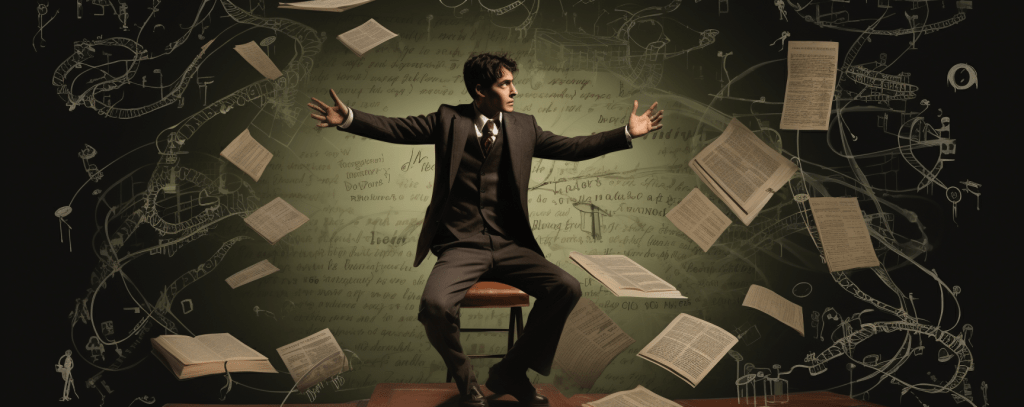
The same holds true for the show’s later adoption of flash-forwards and flash-sideways, which added even more layers to an already intricate tapestry. Flash-forwards broke the temporal bounds, offering glimpses into future events, while flash-sideways explored alternative timelines or realities. Such bold narrative choices could easily have sunk a lesser show, but “Lost” managed to navigate these turbulent storytelling waters with aplomb.
This show wasn’t content with linear narrative. No, it toyed with temporality like a cat with a ball of yarn, except this yarn was woven with elements of science fiction, supernatural events, and deeply flawed, relatable characters. This is one of the most crucial screenwriting tips for writers keen on non-linear storytelling: Know your characters inside and out. Your audience will forgive a convoluted plot if they care about the people navigating it.
However, the innovative storytelling methods didn’t stop there. “Lost” also leveraged its episode and season arcs to build a larger, interconnected narrative. The individual stories served as pieces of a much larger puzzle, and figuring out how they all fit together was half the fun. This is a key point when considering screenplay structure in your own works. Make sure that your smaller arcs feed into the larger narrative. This doesn’t mean every subplot needs to contribute to the ‘main quest,’ but they should enrich the world you’re building, adding layers of complexity that reward viewers for paying attention.
The show’s experimental narrative didn’t come without risks. It’s not uncommon to hear critiques about how the show lost its way, or bit off more than it could chew. But whether you loved the series or hated it, you can’t deny its impact. “Lost” proved that audiences are not only capable of handling complex narratives but also hungry for them. As we discuss writing tips, it’s essential to note that taking risks can pay off in unexpected ways. Whether it’s the introduction of a surprise character or a plot twist that turns everything on its head, unexpected elements can elevate your screenplay from good to unforgettable.
Here’s where it becomes a lesson for budding screenwriters: “Lost” thrived on its complexities rather than shying away from them. And that’s a critical lesson in writing a screenplay. Often, we’re told to simplify, to streamline, to make our stories ‘accessible.’ While there’s value in clarity and coherence, “Lost” is a testament to the beauty of embracing complexity. If you make the narrative layers integral to your story, your audience will accept—no, relish—the challenge of untangling them.
Character Complexity: The Beating Heart of ‘Lost’
What made “Lost” so captivating wasn’t just its intricate plotlines and innovative structure; it was the characters who populated the mysterious island. In a manner that’s still studied in screenwriting workshops today, the show created multi-dimensional characters who were as complex as the world around them. Their internal struggles often mirrored the larger, external mysteries, making the character arcs indispensable to the overall narrative. And if you’re into writing tips, well, this is a golden one: your characters should be inextricably linked to your plot, each pushing the other toward a shared climax.
Let’s take, for instance, Jack Shephard, the de facto leader of the crash survivors. In a lesser show, Jack might have been a one-note hero, all nobility and courage. But “Lost” was never about simple characterizations. Jack was also deeply flawed—haunted by daddy issues, plagued by self-doubt, and, at times, his own worst enemy. His journey from a man of science to a man of faith is one of the most compelling arcs on the show.
Similar depth is found in Kate Austen, who is both a fugitive and a kind-hearted person seeking redemption. Or take Sawyer, the charming con-man with a tragic past. These aren’t just archetypes; they’re fully realized people. Their complexities make them relatable, even when they’re making infuriating decisions or shocking mistakes. That’s a lesson in writing a screenplay that’s not often highlighted but crucial: allow your characters to be flawed, let them make mistakes, and then let them face the consequences of their actions.
And oh, the consequences! “Lost” excels at what we might call “emotional payoff.” Think about the moment when Sun and Jin, two characters who’d been through hell and back both in their marriage and on the island, finally reunite. Their love story, filled with ups and downs, becomes a significant focal point, encapsulating the overarching themes of redemption and transformation. If you want a great writing prompt, consider this: Write a scene where two characters reconcile after a long separation, and let the moment be earned, filled with the weight of their shared history.
What set “Lost” apart was its ensemble cast, where every character had a role to play, and every role was essential. Just look at the so-called ‘tailies’ introduced in the second season. Characters like Ana Lucia, Libby, and Mr. Eko started as strangers, even antagonists, but soon became an integral part of the story. This is a crucial aspect of screenplay structure: your secondary characters should not be afterthoughts. They must serve a purpose, whether it’s to aid or obstruct your protagonist, reveal hidden truths, or add layers to your story’s world.
The character arcs in “Lost” also did a magnificent job of intersecting and diverging at crucial moments. The evolving relationship between Jack and Locke, for example, was a fascinating study of opposites. While Jack was a man of science, Locke was a man of faith. Yet, both were essential to the unfolding events on the island, and their interactions created some of the series’ most memorable moments. In your own work, consider how different character arcs can intersect, collide, or even mirror each other to create a richer narrative tapestry.
The takeaway here for aspiring screenwriters is profound yet simple: respect your characters. They are the lifeblood of your story. Spend time crafting their backstories, their personalities, and their flaws. Let them evolve, let them fail, and let them grow. And make sure that growth is reflected in the story you’re telling. Screenwriting tips often emphasize plot, dialogue, and structure, but it’s characters that provide the emotional core. When you get the audience to care deeply about the people in your story, you’ve won half the battle.
The Intertwined Threads of Theme and Mystery: Unraveling the Layers of “Lost”
“Lost” was not just a survival drama or a character study; it was also a mosaic of themes and mysteries that challenged viewers on multiple levels. The show deftly employed motifs ranging from religious iconography to philosophical questions, weaving them into the fabric of its island tapestry. But here’s the trick—the writers managed to connect the thematic elements to the character arcs and plot twists. There’s something to learn here for anyone who is interested in screenwriting tips: a theme isn’t just a topic, it’s an ongoing conversation between your story and your audience.
One of the most poignant themes of “Lost” is the concept of fate versus free will. While Jack Shephard fights to assert control, John Locke believes he’s been chosen for a higher purpose. These contrasting philosophies don’t just make for great character drama; they also directly impact the story’s events. The tension between control and destiny can be seen in the narrative choices the characters make—from decisions about leadership and alliances to the eternal question of whether to leave the island or stay.
Any discussion about theme would be incomplete without a mention of the iconic numbers 4, 8, 15, 16, 23, 42. These numbers recur throughout the series in uncanny ways, from the settings on a cursed lottery ticket to the serial numbers on a doomed aircraft. While they provide an intriguing puzzle for the audience, they also serve a deeper thematic purpose, representing the unpredictability of life and the ambiguity of luck. As a writing prompt, consider introducing an abstract concept, like a set of numbers or a recurring symbol, and then explore its thematic ramifications throughout your story. Trust me, your audience will love trying to decipher its meaning.
So, let’s talk about the elephant in the room: the show’s approach to resolving its mysteries. While “Lost” kept audiences hooked with its labyrinthine plot and enigmatic questions, it also faced criticism for leaving certain threads dangling. However, it’s essential to recognize that not every mystery requires an answer. Sometimes the question itself, or the journey to a possible solution, serves the narrative more effectively than a straightforward resolution. Take the “Hatch,” for instance. While its ultimate significance evolves throughout the series, the initial mystery of what lies within and who built it serves as a gripping focal point for the first couple of seasons. If you’re writing a screenplay, remember that pacing and suspense are crucial elements of screenplay structure; you don’t have to reveal all your cards at once.
One of the show’s boldest moves was its use of alternate realities in the final season, described as the “Flash Sideways.” These segments explored what life might have been like for the characters under different circumstances. This narrative device allowed the writers to delve into existential questions about identity, purpose, and the afterlife. If you’re looking for innovative writing tips, the use of alternate timelines or realities offers an excellent opportunity to explore “what if” scenarios that can shed light on your characters and themes.
The central question that “Lost” poses is perhaps the simplest yet most complex of all: what does it mean to be lost? Is it a physical state, an emotional maze, or a spiritual crossroads? The brilliance of the show lies in its refusal to provide easy answers. Through its complex characters, intricate plotlines, and layered themes, it invites the audience to get lost in order to find meaning.
Consider incorporating these layered elements into your own work. Puzzles and mysteries can provide the kind of intellectual engagement that complements emotional investment in characters. Themes allow for a more profound, even philosophical, engagement with your story. When combined effectively, these elements elevate your screenplay from mere entertainment to art.
And that’s the ultimate goal, isn’t it? To not just create a compelling story but to offer something that lingers, that provokes thought and emotional resonance long after the screen fades to black. Whether it’s through crafting intricate character arcs, embedding tantalizing mysteries, or weaving thought-provoking themes, aim to write a story that does more than just pass the time. Aim to write a story that enriches, challenges, and perhaps even transforms those who experience it.
The legacy of “Lost” serves as both inspiration and cautionary tale for aspiring screenwriters. If you’re ready to take your writing to the next level, delve deep. Ask big questions and dare to offer complicated answers. Create characters who live and breathe, who love and lose, who seek and discover. Bind them in a narrative that’s as complex as they are, and don’t shy away from the intellectual and emotional depth that can make your story unforgettable. Because in the end, what makes “Lost” a cultural phenomenon isn’t the answers it provides, but the questions it dares to ask. And isn’t that what great storytelling is all about?
✍️ Whether you’re mastering the art of dialogue, structure, or character development, the power of AI can be a game-changer in your writing journey. My Free Ebook, ‘AI for Authors’ delves into how AI-powered prompts can provide a unique edge to your storytelling process. If you’re intrigued by the prospect of supercharging your fiction skills, download your free copy today and explore new horizons in creative writing.
 A.I. in Screen Trade