Introduction and The Importance of Classical Hollywood Screenwriting
For those with a passion for both cinema and the written word, Classical Hollywood represents a zenith of narrative finesse and character complexity. Whether you’re working on writing a screenplay or merely looking to improve your writing skills, there’s a goldmine of wisdom to be excavated from these time-honored tales.
First off, what exactly do we mean by “Classical Hollywood cinema”? We’re talking about American films made roughly between the 1910s and the 1960s—a period characterized by a unique blend of stylistic continuity, narrative coherence, and above all, some of the most enduring stories ever told on celluloid. Stars like Audrey Hepburn, James Stewart, and Humphrey Bogart became iconic figures during this era, but let’s not overlook the screenwriters—the unsung heroes who gave these stars their words, their essence, their soul.
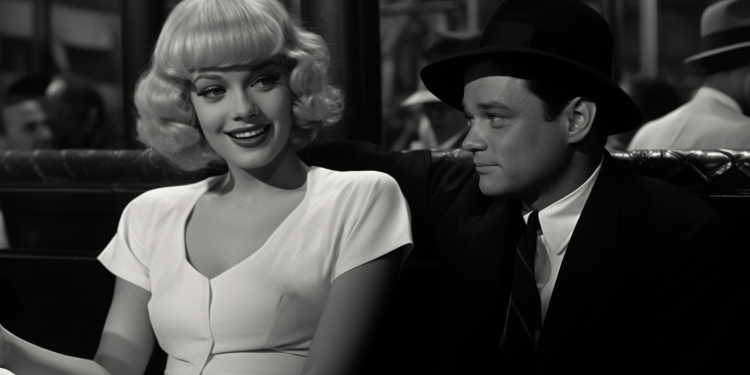
And why, you may wonder, should contemporary writers care about these “old” movies? Picture this: you’re a musician keen on composing symphonies. Would you pass up the chance to study Mozart or Beethoven? The same holds for writers of all stripes. From mastering the screenplay structure to honing dialogue, the scripts from this period serve as a Masterclass in storytelling fundamentals. So, if you’re aiming for captivating narratives and unforgettable characters, the classics offer a roadmap.
That brings us to the role of the screenplay in the movie-making process. For those newer to the craft, you might wonder, “Isn’t the director the one who makes the film what it is?” Well, yes and no. You can think of a film as a building, and the screenplay is its architectural blueprint. Without a robust plan, even the best craftsmen—our directors, actors, and cinematographers—are lost. If you’re working on writing a screenplay, always remember: your words form the bedrock of the entire cinematic experience.
Now let’s talk about what makes these Classical Hollywood screenplays such perfect models for study. First and foremost is structure. Remember, the three-act structure isn’t just a formula; it’s a foundation upon which to build captivating arcs and complex characters. Take the evergreen “Casablanca”—it’s the epitome of structural mastery. It has an evident beginning, middle, and end, yet within those confines, the characters grapple with intricate dilemmas that transcend the plot.
Then there’s dialogue. Ah, the unforgettable lines! From “Here’s looking at you, kid,” to “After all, tomorrow is another day,” the dialogue from these classics has penetrated the global vernacular. But the magic lies not just in the catchiness of these lines but in their ability to reveal character depth and drive the story forward. If you’re looking for writing tips to spice up your dialogue, the classics never disappoint.
While we’re on the subject of dialogue, let’s not forget subtext—the unsaid that speaks volumes. Writers like Ernest Lehman and Ben Hecht were masters at crafting dialogue where what’s unsaid matters just as much as what’s spoken. Learning to write subtext is like learning to add seasoning to a dish. It can elevate your writing from good to unforgettable.
Lastly, the characters. The protagonists in these films are complex, multi-dimensional beings who want something, fear something, and face obstacles. Their quests, whether it’s love, justice, or personal redemption, are universal. It’s the pursuit that makes the story. Classical Hollywood provides a spectrum of such quests. So, if you’re ever stuck with writer’s block, flipping through a screenplay like “Gone With the Wind” or “The Maltese Falcon” could be the writing prompt you didn’t know you needed.
The Top 10 Screenplays: A Deep Dive
Whether you’re into screenwriting or simply looking for writing tips to sharpen your craft, these gems offer a masterclass in narrative brilliance. So, pull out your notepads, folks; school is in session!
- “Casablanca” (1942) – Screenplay by Julius J. Epstein, Philip G. Epstein, and Howard Koch
- Structure: This film is a triumph in economical storytelling. Everything you need to know about the plot and characters is revealed at the right time, keeping you glued to the screen.
- Dialogue: We’ve all heard the line “Here’s looking at you, kid.” This dialogue epitomizes the essence of the characters and their complex relationships.
- Tip: Use dialogue as a double agent that both propels the plot and deepens character.
- “Gone with the Wind” (1939) – Screenplay by Sidney Howard
- Structure: Notice how the setting, the Civil War, parallels Scarlett O’Hara’s personal turmoil, making the backdrop a character in its own right.
- Dialogue: Scarlett’s dialogue reveals her transformation over time, and her last line in the film is a lesson in character arc completion.
- Tip: Utilize your setting as an active element that complements character development.
- “Sunset Boulevard” (1950) – Screenplay by Charles Brackett, Billy Wilder, and D.M. Marshman Jr.
- Structure: This screenplay employs the flashback technique flawlessly, keeping the audience in suspense.
- Dialogue: The dialogue is laced with irony and wit, capturing the disillusionment of Hollywood.
- Tip: Don’t shy away from using non-linear structures if it enhances your story.
- “It’s a Wonderful Life” (1946) – Screenplay by Frances Goodrich, Albert Hackett, and Frank Capra
- Structure: The plot hinges on a “what if” scenario, a powerful device for character exploration.
- Dialogue: The conversations are genuine, making the characters relatable and human.
- Tip: Sometimes, simplicity in dialogue delivers the most emotional punch.
- “All About Eve” (1950) – Screenplay by Joseph L. Mankiewicz
- Structure: The narrative employs parallel storylines to offer different perspectives.
- Dialogue: It’s snappy and full of subtext, revealing hidden character motives.
- Tip: Use dialogue to show, not tell. Let characters reveal themselves through what they say, or don’t say.
- “On the Waterfront” (1954) – Screenplay by Budd Schulberg
- Structure: The story builds up to a satisfying climax that resolves both the plot and character arcs.
- Dialogue: Who could forget Marlon Brando’s “I coulda been a contender”? It encapsulates the character’s internal struggle.
- Tip: Let your dialogue serve as a window into your characters’ inner conflicts.
- “To Kill a Mockingbird” (1962) – Screenplay by Horton Foote
- Structure: The film brilliantly weaves multiple plotlines into a coherent narrative.
- Dialogue: It’s filled with ethical undercurrents, making the characters morally complex.
- Tip: Inject ethical or philosophical questions into dialogue to deepen thematic resonance.
- “The Maltese Falcon” (1941) – Screenplay by John Huston
- Structure: The mystery unfolds at a perfect pace, keeping the audience engaged.
- Dialogue: Snappy and mysterious, each line leaves you wanting more.
- Tip: Keep your audience guessing but deliver on the promise by the end.
- “Rebecca” (1940) – Screenplay by Robert E. Sherwood and Joan Harrison
- Structure: A fine example of how suspense should be built gradually.
- Dialogue: It contributes to the gothic atmosphere, evoking a sense of dread.
- Tip: Use dialogue to set the tone and atmosphere of your story.
- “The Wizard of Oz” (1939) – Screenplay by Noel Langley, Florence Ryerson, and Edgar Allan Woolf
- Structure: A hero’s journey that’s meticulously structured.
- Dialogue: Iconic lines like “There’s no place like home,” capture the essence of the story.
- Tip: Don’t underestimate the power of a well-placed line; it can become the voice of the entire screenplay.
So, what are we picking up from these screenwriting titans? A killer screenplay structure, dialogue that does more than just fill space, and character development that could serve as a psychology case study. Your turn now—roll up those sleeves and start writing a screenplay that future generations might study. Time to make your mark, my friends.
Taking Inspiration: Applying Classical Lessons to Modern Screenwriting
You’ve pored over the classics. You’ve analyzed dialogue, deconstructed structure, and dissected characters down to their bones. Now, let’s talk about how you can apply these principles to your own work. A blend of old-school wisdom and new-school flair can be the secret sauce that sets your screenplay apart in today’s competitive landscape.
Dialogue as a Storytelling Device
It’s easy to think of dialogue merely as a way for characters to communicate. But as we’ve seen in classics like Casablanca, dialogue serves a higher purpose. In a way, it’s a form of action, driving the plot forward while simultaneously delving into a character’s psyche. So, how do you craft lines that echo through the annals of cinema? A useful screenwriting tip here is to allow your characters to speak in contradictions, revealing layers of complexity. Think of Scarlett O’Hara’s numerous conflicting emotions. Her dialogue isn’t just filler; it’s a mirror to her soul.
The Art of Screenplay Structure
A tight, well-crafted structure can elevate your screenplay from a simple narrative to an emotional experience. Whether you choose a straightforward three-act structure or opt for something more avant-garde à la Sunset Boulevard, the key is to maintain pacing and build tension. One approach is to put your characters in worsening situations until they have no choice but to confront their biggest fears, a method employed by the writers of On the Waterfront. Modern software like Final Draft and Celtx have built-in tools for this, but the classics teach us that the core of effective screenplay structure is in understanding human emotions.
Character Arcs That Resonate
How does George Bailey in “It’s a Wonderful Life” move from despair to hope? Why do we care? A well-executed character arc is the backbone of any memorable story. Here’s a writing tip that doubles as a life lesson: people are complicated. The classics don’t shy away from this. Characters go through a range of experiences and emotions that mold them into fuller beings by the end. Whether you’re writing a screenplay or any form of story, the evolution of your characters should be your polestar. For example, consider adding internal and external conflicts that your characters can confront and learn from, mirroring real human growth.
Theme: The Silent Narrative Force
A powerful, underpinning theme can tie your narrative together in a way that makes it more than just a sequence of events. To Kill a Mockingbird isn’t just about a court case; it’s about morality, integrity, and the loss of innocence. When crafting your screenplay, think about the bigger message you want to convey. Then, express this theme through character dialogue, actions, and even the setting. Writing prompts can be particularly useful here. Try scribbling down some broad themes and find creative ways to integrate them into your narrative.
Adapt, Don’t Copy
Now, I’m not saying you should take a carbon copy of “Gone with the Wind” and just change the names. No, the aim is to adapt the enduring elements that make these classical screenplays timeless. It’s about capturing the spirit, the essence, and channeling that into something uniquely yours. Adapt the old rules for a new age. Blend these seasoned techniques with modern storytelling elements like non-linear timelines, unreliable narrators, or whatever your creative heart desires.
Draft, Revise, Repeat
The first draft is just that—a draft. Even the classics underwent multiple revisions. Take a page from their book (or script, in this case), and don’t be afraid to make major changes. There’s no “one-size-fits-all” method for this. Some writers prefer to get everything down in a rough draft before going back to make revisions, while others like to revise as they go along. Whatever your method, the key to successful screenwriting—or any form of writing, for that matter—is persistence and a willingness to improve.
Let’s wrap it up. We’ve journeyed through the annals of cinematic history, studied the masters, and emerged with a toolkit of skills that are as relevant today as they were in the Golden Age of Hollywood. So, get out there and write the next great screenplay that does justice to the classics while breaking new ground. The world is waiting for your story, and who knows? Maybe someday, some aspiring writer will be analyzing your work for golden nuggets of wisdom. Happy writing!
✍️ Whether you’re mastering the art of dialogue, structure, or character development, the power of AI can be a game-changer in your writing journey. My Free Ebook, ‘AI for Authors’ delves into how AI-powered prompts can provide a unique edge to your storytelling process. If you’re intrigued by the prospect of supercharging your fiction skills, download your free copy today and explore new horizons in creative writing.
 A.I. in Screen Trade