The Queen of the Whodunnit: Introduction to Agatha Christie’s Unique Style
Agatha Christie is name that is synonymous with the detective novel. She has the honor of being the best-selling novelist of all time, her works have been translated into more languages than Shakespeare’s, and her creations like Hercule Poirot and Miss Marple are household names. Yes, this is the queen of whodunnits, whose mastery over the genre has left an indelible mark.
When we talk about Christie’s unique style, we have to delve into her fascinating approach to structure, which stands as a cornerstone of her storytelling. For anyone wanting to improve writing skills, analyzing the layout of a Christie novel can offer invaluable insights. Her stories are models of balance and economy. It’s never just about the detective and the criminal; it’s a complete ecosystem teeming with misdirection, legitimate clues, compelling subplots, and a host of characters who are always more than they initially seem.
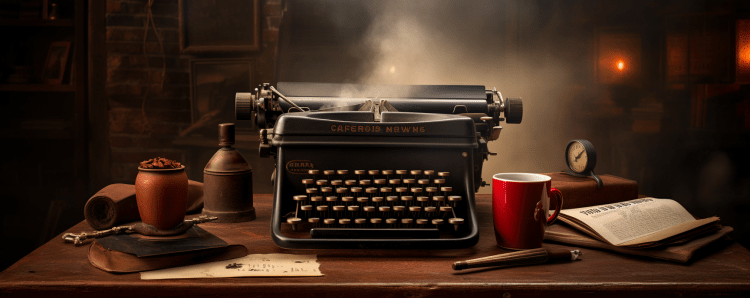
In a Christie novel, you won’t find page-long descriptions of a setting or exhaustive emotional monologues. Her writing is not minimalistic, but it’s definitely economical. Every word matters, and every line moves the story forward or adds depth to a character. Think about the opening chapters of “Murder on the Orient Express,” for instance. Within a few pages, readers are not only introduced to the detective Hercule Poirot but also the key players of the drama that’s about to unfold. And what about the clues? Ah, they’re carefully planted, like landmines, waiting for the reader—or the detective—to step on them.
Christie makes use of “red herrings,” those false clues or distractions that throw both the reader and sometimes even the detective off track. These aren’t just gimmicks for Christie; they serve as crucial structural elements that keep the reader engaged, turning pages, and second-guessing their own theories. Her utilization of red herrings is often so masterful that it’s almost like a lesson in creative writing, offering brilliant writing tips to anyone paying attention.
It would be a mistake to consider these aspects of Christie’s storytelling as mere genre requirements. They’re instead elements that she has adapted, twisted, and perfected to create a style distinctly her own. Christie understood early on what many writers realize later in their careers: Structure is not a constraint; it’s a tool. By placing boundaries on her narrative, she had a playground within which she could let her creativity roam free.
Her settings also vary widely, from the closed environments like the titular train in “Murder on the Orient Express” to more open but still confined locations like the island in “And Then There Were None.” These locations are more than just backdrops; they’re intrinsic parts of the narrative structure. The confined settings create a heightened sense of tension and urgency, acting almost like additional characters in the plot. They contribute to the overall “closed circle” of suspects, another Christie hallmark, where the murderer has to be one of a limited group, thereby ramping up the suspense.
She often employed the “unreliable narrator” or offered narratives from multiple points of view, allowing readers to invest in different perspectives, which is a fantastic method to deepen the plot and widen the landscape of suspicion. Examples can be seen in works like “The Murder of Roger Ackroyd,” where the revelation of the unreliable narrator shook the entire reading community at the time of its release.
If you’ve ever wanted to try writing a novel that captures audiences in the same way Christie did, absorbing her structural genius is step one. Her stories are more than just puzzles—they’re marvels of narrative engineering. With every turn of the page, the reader becomes more deeply entwined in the complexities she’s set forth, making it nearly impossible to escape the web she’s woven. And let’s be honest: who would want to?
The Characters and the Clues: Crafting a Christie-esque Ensemble
If structure is the backbone of an Agatha Christie novel, then characters and clues are the flesh and blood. Her characters are much more than suspects and witnesses; they are psychologically complex beings, each crafted with a unique set of motives, alibis, and secrets. For anyone looking to improve their creative writing skills, studying how Christie breathes life into her characters is akin to taking a masterclass in characterization.
Let’s take the renowned Hercule Poirot as an example. Although his character seems straightforward at first—an eccentric Belgian detective with an affinity for ‘order and method’—his psychological depth gradually unfolds through the series. Think about “Death on the Nile,” where his moral dilemma concerning love and justice offers a gripping subtext. It adds layers to what could otherwise be a two-dimensional detective, thus turning him into an enigmatic figure. In this sense, writing a novel—or even a short story—with compelling characters often involves this kind of layering.
Now, how do you introduce an ensemble of characters without overwhelming the reader or disrupting the narrative flow? Agatha Christie usually gives us brief but potent descriptions, using dialogue to reveal personality traits. In “The Mysterious Affair at Styles,” the debut of Poirot, readers quickly understand the dynamics between various members of the Inglethorp household through their conversations, suspicions, and how they react under pressure. This is a fantastic writing tip for anyone struggling with the ‘show, don’t tell’ rule; Christie shows us her characters through their interactions, letting readers form their own judgments.
Moving on to clues, Christie’s finesse is unparalleled. She employs clues in two major ways: those that are hidden in plain sight and those that are obscured but crucial. Any writer will tell you that planting clues is no child’s play. A clue too obvious might ruin the suspense, and one too obscure could lead to reader frustration. Christie’s “Five Little Pigs,” for example, is a case study in well-planted clues, where each suspect’s account adds a new piece to the puzzle but also raises further questions.
In fact, the clues often reveal more about the characters than they do about the actual crime, making for a rich, multi-layered read. If you’re looking for writing prompts to practice this technique, try plotting a simple murder mystery where each clue does double duty: advancing the reader toward solving the crime and revealing something new about a character. This is a surefire way to add depth and complexity to your narrative.
Speaking of clues and characters, one can’t ignore the delectable side servings of social commentary often present in her work. Whether it’s the exploration of family dynamics in “A Murder Is Announced” or highlighting the biases and prejudices of a small community in “Murder in the Vicarage,” these elements are woven into the fabric of the story, serving as clues to understanding the characters better.
If you aim to craft a Christie-esque ensemble, always remember that the characters should have a purpose beyond just filling up a suspect list. They must each carry a piece of the puzzle, no matter how insignificant it seems. When writing a novel in the mystery genre, this contributes immensely to a balanced narrative where every character serves multiple functions: suspect, clue-bearer, and a lens through which to view the crime and its social milieu.
The creation of a compelling cast and the masterful use of clues serve as more than mere elements of suspense; they’re essential storytelling tools that lend depth, intrigue, and multi-dimensionality to the narrative. In a genre often (unfairly) dismissed for prioritizing plot over prose, Agatha Christie proves that a well-crafted mystery can be a playground for complex characters and themes, offering a lesson in writing that’s invaluable for novices and experts alike.
Crafting Your Own Christie: A Step-by-Step Guide to Writing the Quintessential Whodunnit
If you’ve ever found yourself engrossed in an Agatha Christie novel, marveling at how she can spin webs of suspense with such ease, you might have wondered: “How can I do that?” Well, fellow writers, the good news is that some of her storytelling secrets can indeed be learned and applied in your own work. And what better way to improve your writing skills than by walking in the footsteps of the Queen of Mystery?
First things first—let’s talk about the genesis of a Christie-like tale. Often, a compelling premise is all it takes to capture your reader’s attention. Whether it’s a murder during a dinner party like in “The Murder of Roger Ackroyd” or a crime on a stranded train in “Murder on the Orient Express,” a gripping setup is crucial. As a writing exercise, think of the most mundane setting you can—say, a supermarket—and brainstorm how you could transform that into a hive of deceit, lies, and intrigue. You’d be surprised how turning the ordinary into the extraordinary can yield some of the best creative writing results.
Once your setting is established, it’s time to move on to your characters. A golden rule? Each character should be both a suspect and a red herring. This means they should have a clear motive for the crime, but also possess traits or circumstances that could ultimately absolve them. If you’re stuck, writing prompts can be beneficial here. Jot down quick profiles of each character, highlighting not just their potential motives but also their redeeming qualities or alibis. This makes for a balanced cast and keeps your readers guessing until the very last page.
We’ve talked about the structure and characters, but what about pacing? Agatha Christie was a master of pacing, making sure each chapter, or even each page, pushed the story forward. A writing tip for mastering pacing is to outline your major plot points in advance, then fill in the details as you write. Not only will this help you maintain a consistent rhythm, but it’ll also ensure you don’t leave any loose threads hanging.
Christie also excelled at misdirection. Characters might lie, clues may contradict one another, and sometimes, what you think is a revelation may be another trap set by the writer. Implementing misdirection in your own work can be challenging, but the key is to always play fair with your readers. Every twist, turn, or red herring must be plausible, with enough breadcrumbs laid out in the story to make the surprises feel earned, not cheap.
Finally, the climax. For a fulfilling and impactful resolution, your protagonist must solve the case using the clues provided, and not through some deus ex machina. Christie’s Hercule Poirot often assembled all the characters to dissect the events and reveal the murderer. In “And Then There Were None,” arguably her most famous work, the killer’s identity and motivation are meticulously unraveled in a posthumous confession, offering a chilling but satisfying conclusion. When writing your own climactic scene, ensure it ties up not just the ‘who’ but also the ‘why,’ as that’s what will resonate with readers long after they’ve turned the last page.
As we come to the end of this exploration, it’s worth noting that while emulating Agatha Christie provides a brilliant foundation, never forget to inject your own unique voice and style into your work. After all, Christie wasn’t great because she followed someone else’s blueprint; she was great because she crafted her own. By understanding and applying these principles, you can elevate your own narrative, creating stories that not only intrigue but also captivate, leaving an indelible impression on your readers.
So, ready to pen your own mystery masterpiece? Just remember, the real magic happens when you take these guidelines and make them your own, molding them to fit your unique storytelling voice.
✍️ Whether you’re mastering the art of dialogue, structure, or character development, the power of AI can be a game-changer in your writing journey. My Free Ebook, ‘AI for Authors’ delves into how AI-powered prompts can provide a unique edge to your storytelling process. If you’re intrigued by the prospect of supercharging your fiction skills, download your free copy today and explore new horizons in creative writing.
 A.I. in Screen Trade