Food in film is not just a feast for the eyes but often holds a much more profound symbolic value. As an essential part of human life, food carries a wealth of cultural, emotional, and socio-political connotations. It can express love, celebration, unity, and comfort, but also denote conflict, disparity, and decadence. In this analysis, we will dissect the top 10 movie feasts of all time and examine how food symbolism enhances the narrative.
1. The Lavish Banquet: “Babette’s Feast” (1987)
No discussion of food in film can commence without mentioning Gabriel Axel’s “Babette’s Feast”. The titular feast in this Danish film signifies an act of generosity and grace, serving as a spiritual revelation for the austere community. It demonstrates how food can embody opulence, contrast cultural disparity, and ultimately, serve as a symbol of transformation and unity.
2. The Thanksgiving Showdown: “The Ice Storm” (1997)
Ang Lee’s “The Ice Storm” presents a tense Thanksgiving dinner, where food acts as a buffer for unspoken tensions and fractured relationships. The turkey, a staple of American holiday feasts, serves as a symbol of a shared cultural ritual but also the inherent hypocrisy in the Carver family’s interactions.
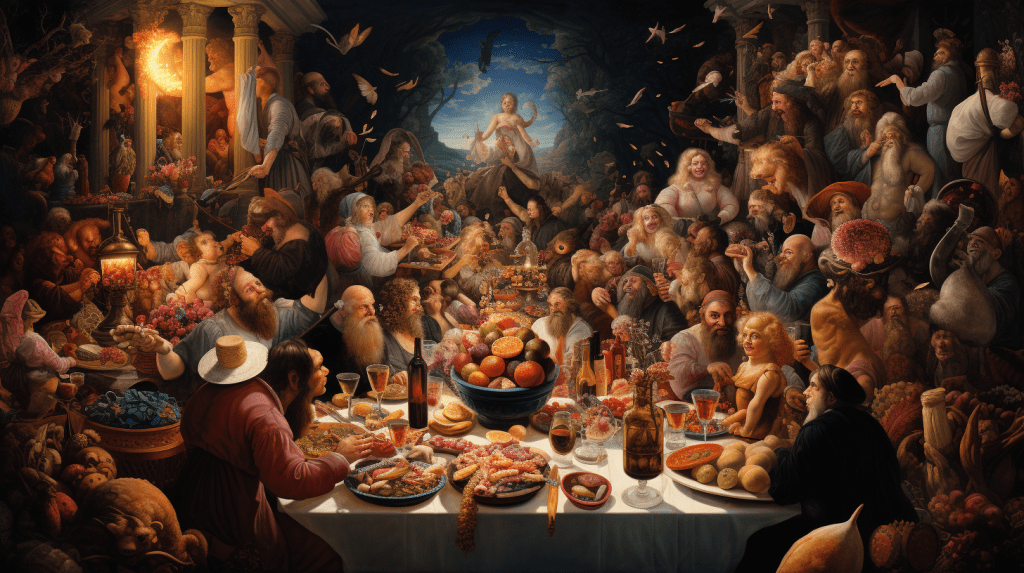
3. The Defiance of Consumption: “The Discreet Charm of the Bourgeoisie” (1972)
Luis Buñuel’s surrealist film uses a series of interrupted dinners to satirize the bourgeoisie’s indulgence and pretense. Food, or rather, its absence, illustrates the characters’ existential dilemma and societal absurdities, highlighting Buñuel’s social commentary.
4. The Feast of Friendship: “Julie & Julia” (2009)
The final meal in “Julie & Julia”, featuring Julia Child’s boeuf bourguignon, embodies culinary ambition, friendship, and emotional sustenance. The feast celebrates the power of food to inspire, connect, and evoke joy, underscoring the film’s tribute to culinary arts.
5. The Symbolic Supper: “The Godfather” (1972)
The Italian-American family dinners in “The Godfather” are more than just culinary exhibitions. They illustrate the dichotomy of family love and mafia brutality, represent cultural identity, and often foreshadow impending violence, as in the infamous scene where Michael Corleone’s initiation into the family business is juxtaposed against the christening feast.
6. The Sorrowful Breakfast: “Citizen Kane” (1941)
The breakfast montage in Orson Welles’ “Citizen Kane” utilizes food to depict the gradual estrangement between Charles Foster Kane and his wife. The changing breakfast habits parallel their deteriorating relationship, demonstrating how food can subtly yet powerfully convey emotional shifts.
7. The Opulent Decadence: “Marie Antoinette” (2006)
Sofia Coppola’s “Marie Antoinette” uses food to portray the decadence of the French court. The elaborate meals and lavish pastries signify excess and pleasure, contrasting the outside world’s poverty and unrest, and foreshadowing the impending French Revolution.
8. The Power of Nourishment: “Ratatouille” (2007)
“Ratatouille” elevates food to a medium of expression, capable of evoking deep emotional responses. The climactic feast, a simple ratatouille dish, underlines the film’s theme of artistry beyond societal conventions and has the power to transport Anton Ego, the feared critic, back to his childhood, illustrating the nostalgia and comfort associated with food.
9. The Last Supper: “Indiana Jones and the Temple of Doom” (1984)
The “Chilled Monkey Brains” feast in “Indiana Jones and the Temple of Doom” is a memorable meal filled with exotic and grotesque delicacies. The meal serves to exaggerate cultural differences and heighten the suspense of the foreign and perilous adventure ahead.
10. The Feast of Unification: “Eat Drink Man Woman” (1994)
The opening sequence of Ang Lee’s “Eat Drink Man Woman” displays a grand feast preparation, emphasizing the importance of food in familial bonds and cultural heritage. The weekly Sunday dinners symbolize the changing dynamics within the family, reflecting the conflicts and unity between traditional and modern values.
Conclusion: The Significance of Food in Film
Cinema’s top feasts are not merely about the food presented. They serve as a reflection of societal norms, a narrative tool, and a character definer. These meals, filled with symbolic ingredients, open up dialogues about culture, human relationships, and societal constructs. They allow audiences to digest layered meanings, enhancing the cinematic experience.
✍️ Whether you’re mastering the art of dialogue, structure, or character development, the power of AI can be a game-changer in your writing journey. My Free Ebook, ‘AI for Authors’ delves into how AI-powered prompts can provide a unique edge to your storytelling process. If you’re intrigued by the prospect of supercharging your fiction skills, download your free copy today and explore new horizons in creative writing.
 A.I. in Screen Trade