Once upon a time, the protagonists of our favorite shows were, by and large, paragons of virtue and morality. They were the heroes, their deeds noble, their intentions pure. But as the medium has evolved, so too has the nature of its central characters. We’ve witnessed a steady rise in the prevalence of a different type of protagonist: the anti-hero. Unlike the traditional hero, the anti-hero is a morally complex character who exists in the gray areas between right and wrong. This article aims to explore the evolution of the anti-hero in modern television, focusing on the development of this character type and its impact on narrative structure.
The anti-hero has been a staple of literature and drama for centuries, dating back to the likes of Shakespeare’s Hamlet and Dostoevsky’s Raskolnikov. However, their surge in popularity on television is a relatively recent phenomenon, arguably starting in the late 1990s and early 2000s with shows like “The Sopranos” and “The Shield.” These series gave us protagonists like Tony Soprano and Vic Mackey – characters who, despite their ruthless and morally questionable actions, captivated audiences with their complexity and depth.
This trend continued and expanded with series like “Breaking Bad,” “Mad Men,” and “House of Cards,” each introducing their own unique brand of anti-hero. Walter White, the chemistry teacher turned methamphetamine manufacturer; Don Draper, the charismatic yet deeply flawed advertising executive; Frank Underwood, the scheming politician with a Machiavellian thirst for power. These characters, while deeply flawed, became some of the most iconic figures in television history. They were not the heroes we were used to, but we were drawn to their stories nonetheless.
So, why this shift? Why are audiences so fascinated by these morally ambiguous characters? The answer, in part, lies in their complexity. The anti-hero offers a departure from the traditional black-and-white morality of the classic hero archetype. They exist in the gray areas, walking the line between hero and villain, good and evil. This ambiguity mirrors the complexity of real life, where moral dilemmas are rarely straightforward and people are not simply “good” or “bad.”
The rise of the anti-hero also coincides with a general shift towards more serialized storytelling in television. Unlike episodic shows, where each episode is a self-contained story, serialized shows tell one continuous story over multiple episodes or even an entire series. This format allows for greater character development, giving writers the opportunity to delve into the complexities and contradictions of their characters. In this sense, the anti-hero is a product of serialized storytelling, as their development often hinges on their moral ambiguity and the choices they make over time.
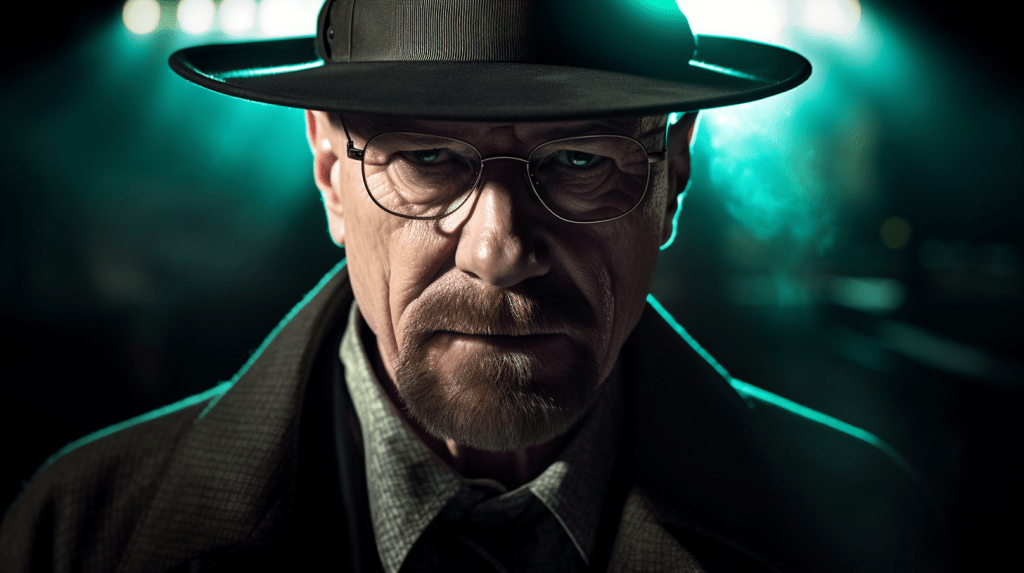
However, the popularity of the anti-hero is not without its challenges. As writers, we must tread a careful balance between making our anti-heroes complex and ensuring they don’t cross the line into being unlikable or irredeemable. This requires a deep understanding of character development and narrative structure. We must show the consequences of their actions, both for themselves and those around them. We must give them moments of vulnerability and humanity, moments that allow the audience to empathize with them despite their flaws. And perhaps most importantly, we must give them a compelling and believable arc, one that explores their struggles with morality and the consequences of their actions.
Consider Walter White from “Breaking Bad.” Over the course of the series, we see Walter transition from a sympathetic character – a high school chemistry teacher diagnosed with terminal lung cancer – to a ruthless drug kingpin. Yet, despite his increasingly immoral actions, we continue to engage with his story, because we have been given a window into his psyche and his motivations. Throughout the series, we witness critical turning points in Walter’s transformation, each demonstrating his increasing capacity for brutality and moral compromise.
From his first act of violence – the killing of Krazy-8 – to his refusal of an easy out for financing his cancer treatment, choosing instead to continue manufacturing methamphetamine with Jesse Pinkman. We see him let Jane, Jesse’s girlfriend, die, realizing her death would remove an obstacle in his path. We watch as he chooses to take drastic measures against rival drug dealers, asserting his power in the process, and later declaring himself to be the danger, the one who knocks. Finally, in a move that solidifies his transformation, he orchestrates the death of his enemy, Gus, using a bomb in a retirement home, demonstrating just how far he’s willing to go to secure his power.
In all of these moments, we see the struggle of Walter White, the man, against Heisenberg, the persona he has created for himself in the world of methamphetamine production. And yet, despite the moral decay, we continue to engage with his story. We sympathize with his initial plight, the desperation of a dying man trying to secure his family’s future. We understand the allure of power and control in a life that has seemingly spun out of his grasp. And we are captivated by the tragedy of a man losing himself to his worst impulses.
In conclusion, the rise of the anti-hero in modern television is a testament to the evolving tastes and expectations of audiences. It reflects a desire for more complex, morally ambiguous characters who reflect the realities and contradictions of human nature. This evolution provides exciting opportunities for us as writers to explore new depths of character and narrative structure. However, it also poses challenges, demanding a delicate balance of complexity and likability, and a nuanced understanding of morality and consequence. As we continue to delve into the gray areas of morality, we must remember to ground our characters in authenticity and humanity, creating compelling, believable arcs that engage our audiences and provoke thought and discussion. As the anti-hero continues to evolve, so too must our approach to crafting these complex characters, continually pushing the boundaries of what is possible in television storytelling.
✍️ Whether you’re mastering the art of dialogue, structure, or character development, the power of AI can be a game-changer in your writing journey. My Free Ebook, ‘AI for Authors’ delves into how AI-powered prompts can provide a unique edge to your storytelling process. If you’re intrigued by the prospect of supercharging your fiction skills, download your free copy today and explore new horizons in creative writing.
 A.I. in Screen Trade